What actually decides this trip
- About 80 km of coast, no railway along it. The sites people come for sit 15 to 60 km apart with nothing useful running between them, so transport decides the trip before taste does — guided, self-drive or neither.
- One bus a day links Bayeux to Colleville-sur-Mer and the American Cemetery, and only between 20 April and 5 November. Outside those dates it does not run at all — what car-free really looks like.
- Eight hours from Bayeux buys about 6h45 at five stops. Fourteen hours from Paris buys roughly four and a half, because about 7.5 are spent on a coach — the Paris trade.
- Every default D-Day tour is American. Juno, Gold, Sword, Arromanches and Pegasus Bridge lie east of Port-en-Bessin and no standard itinerary calls there — the other sector.
- The Bayeux Tapestry is closed until autumn 2027 and is at the British Museum until 11 July 2027. Bayeux is still the best base; just don’t plan a day around the Tapestry — where to stay.
- We print no figures. What you pay moves with your departure point, the season, group size and how far ahead you book — so I write about what is inside the ticket instead.
A guided day, or your own car?
Neither answer is wrong. They suit different trips, and the honest version of each is below.
What the guided day gives you
- Transport that exists. Between Bayeux and Omaha there is one bus a day in season and nothing outside it — the car-free reality
- Someone who has driven the D-roads between the stops before, so you spend the day looking rather than navigating
- Guided time at the stops themselves — on the full day from Bayeux that is all five, in order
- Free cancellation up to 24 hours before, on all six tours listed here
What driving yourself gives you
- Low tide at Omaha, when the sea goes out for what feels like a kilometre. No timetable respects the tide
- La Cambe, which holds 21,222 German graves — more than twice the American cemetery — and which almost no itinerary stops at
- Both sectors on one trip: Arromanches, Longues-sur-Mer and Juno as well as Omaha — which beach to pick
- The Mémorial de Caen, which asks about four hours on its own and eats a beach day if you let it — museums worth the time
The full day from Bayeux, stop by stop
Where the flagship tour goes, in order, and how long you get at each stop.
The day starts at Place de Québec in Bayeux, in the area set aside for tourism vehicles — there is no hotel pickup. It runs eight hours in a Mercedes minivan capped at 19 people, in English, rain or shine.
- Sainte-Mère-Église — 1 hour 30 — The first town in France to be liberated. John Steele’s effigy still hangs from the church tower and the paratroopers are in the stained glass inside. The Airborne Museum on the square wants two hours of its own and is a separate ticket.
- Utah Beach — 1 hour 45 — The westernmost landing, and the one that went comparatively cheaply: 21,000 to 23,000 men of the 4th Infantry Division ashore for about 200 casualties, partly because the current pushed them roughly 2,000 yards south onto a lighter-defended stretch. The airborne inland paid what the beach did not.
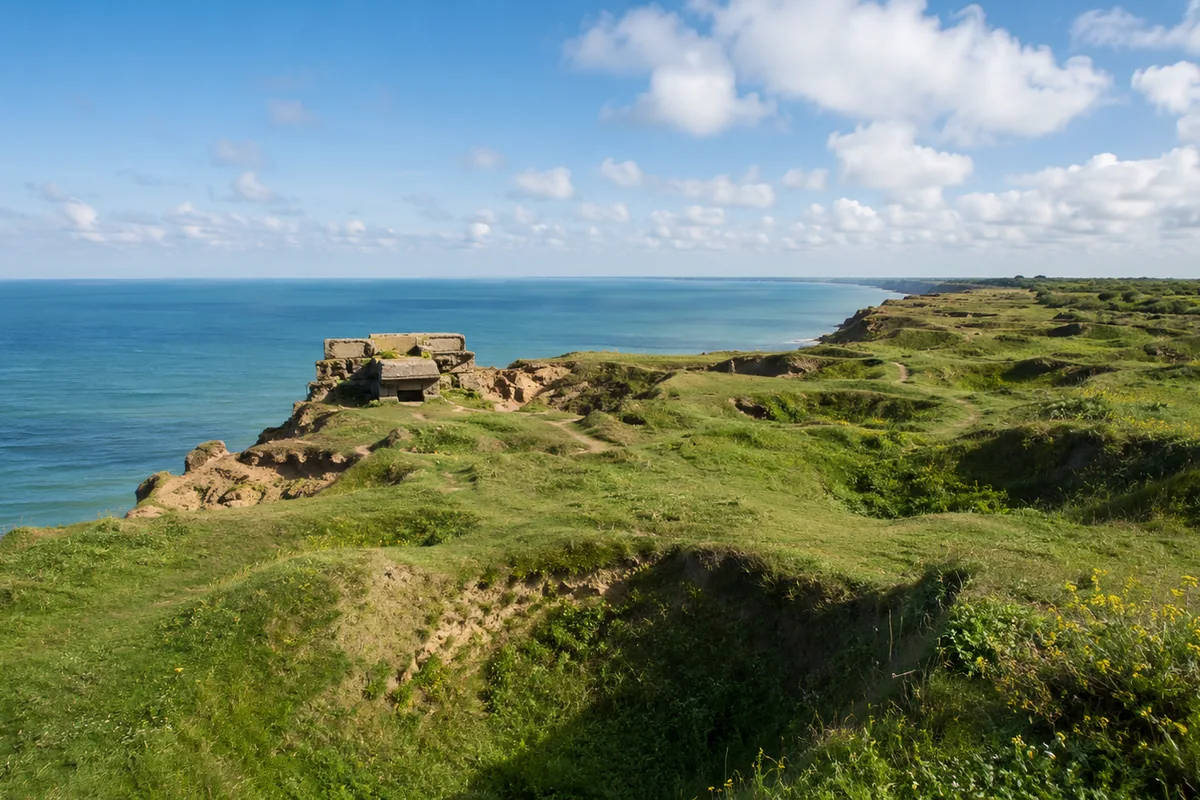
- Pointe du Hoc — 1 hour — The cratered clifftop between the two American beaches, and the most intact bombed landscape on this coast. The Rangers started up at 07:11 and found the guns had been moved inland; of about 190 men engaged, 90 were still fit to fight. The observation bunker platforms are closed at present and you stay on the marked paths.
- Omaha Beach — 1 hour 30 — Eight kilometres of open sand under the bluffs, divided in 1944 into ten sectors from Charlie to Fox Red. It was the most heavily defended assault area and the preliminary bombardment largely missed. Today it is a working public beach with dog-walkers on it.
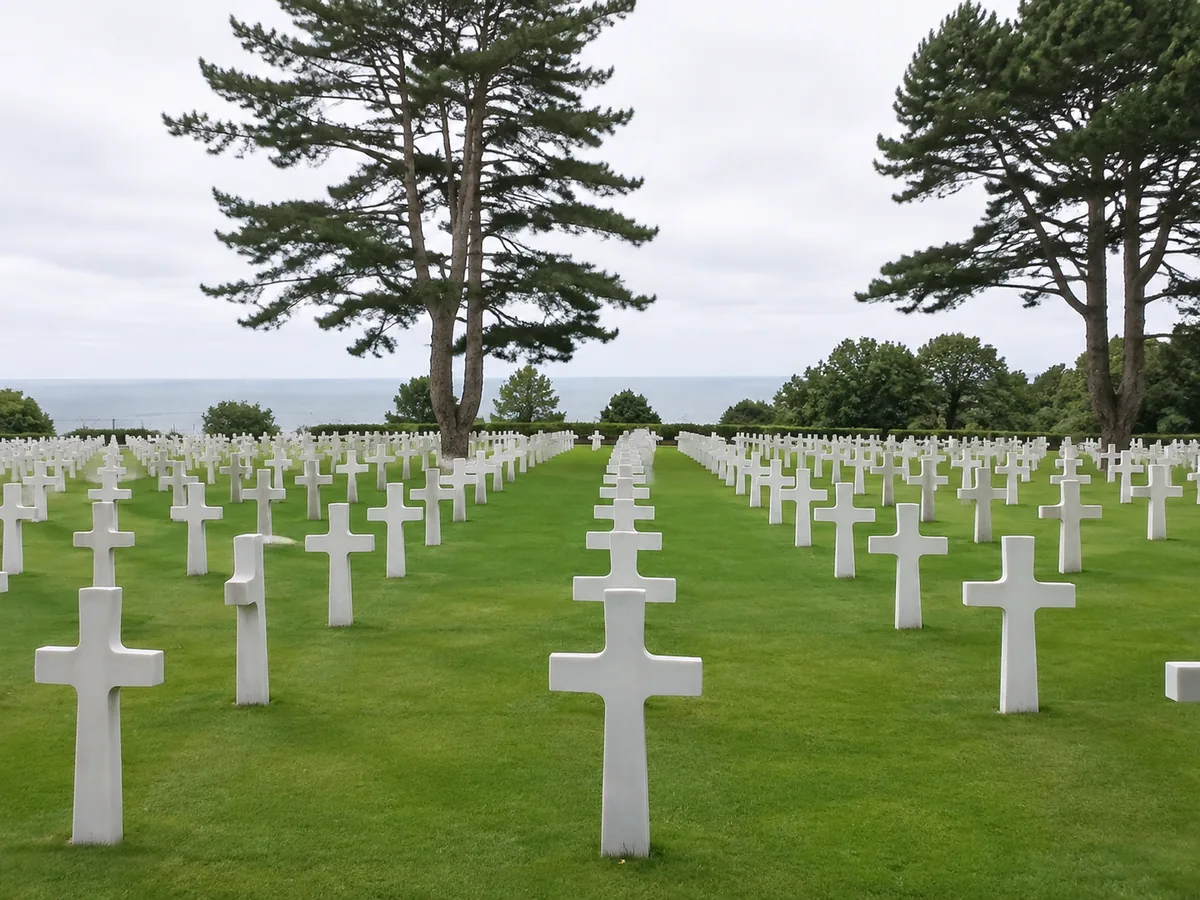
- Normandy American Cemetery — 1 hour — 9,389 graves on the bluff at Colleville-sur-Mer, with 1,557 names on the Walls of the Missing. Entry is free and needs no booking today; the flag-lowering is one hour before closing, so 16:00 on the current 09:00–17:00 schedule.
Round trip from Bayeux town centre, back where you started. The guided visits, the guide-driver and the minivan are in the ticket; museum entries, food and tips are not — what that means in practice. If you only have a morning, the half-day version drops Sainte-Mère-Église and Utah and keeps the rest.
How booking works
Pick your departure point
Bayeux, Caen or Paris settles most of the rest. From Bayeux you buy ground time; from Paris you buy a coach day with a guide on it.
Check the date, not the tour
Availability moves week to week, and the days around 6 June go months ahead. The panel below shows live dates from GetYourGuide.
Reserve, then decide properly
All six carry free cancellation up to 24 hours before, so holding a date costs you nothing but the decision.
Meet at Place de Québec
The two Bayeux tours meet at the same spot and offer no hotel pickup. The private option is the one that collects you from your door.
Live dates for the full day from Bayeux
The tour I recommend to most people who are staying in Normandy: eight hours, five stops, a minivan capped at 19, rated 4.9 across more than 580 reviews. Dates and the current price come straight from GetYourGuide.
Paris coach, Bayeux full day, or half a day?
The three tours most people actually choose between. Everything below is time, distance and what is inside the ticket.
| Paris: Normandy D-Day Sites Guided Day Trip with Lunch | My pickFrom Bayeux: American D-Day Sites in Normandy Full-Day Tour | From Bayeux: American D-Day Sites in Normandy Half-Day Tour | |
|---|---|---|---|
| Departs from | Place du Général Kœnig, Paris 17e | Place de Québec, Bayeux | Place de Québec, Bayeux |
| Total hours | 14 hours | 8 hours | 4 hours |
| Hours on the ground | About 4h30 — roughly 7h30 is coach time | About 6h45 across five stops | About 2h30 across three stops |
| Beaches covered | Utah, plus Omaha for 20 minutes | Utah and Omaha, plus Pointe du Hoc, Sainte-Mère-Église and the cemetery | Omaha, plus Pointe du Hoc and the cemetery |
| Group size | Large air-conditioned coach; no cap published | Mercedes minivan, max 19 | Mercedes minivan, max 19 |
| Lunch | Two courses and a glass of cider, included, at Grandcamp-Maisy | Not included — you buy your own en route | Not included — it is a four-hour tour |
| Entrance fees | Utah Beach Museum ticket included | Not included; the museums are optional extras | Not needed — all three stops are free to enter |
| Tips | Not included | Not included | Gratuities for the guide-driver included |
| Accessibility | Not suitable for mobility impairments or wheelchair users | Not wheelchair accessible; under-4s not permitted | Not wheelchair accessible; under-4s not permitted |
| Worth knowing | Reviewers mention tight legroom more than anything else | The most complete American-sector day on this list | Pointe du Hoc may close for works in 2026–2027; Longues-sur-Mer replaces it |
| View → | Book this → | View → |
Photo Gallery
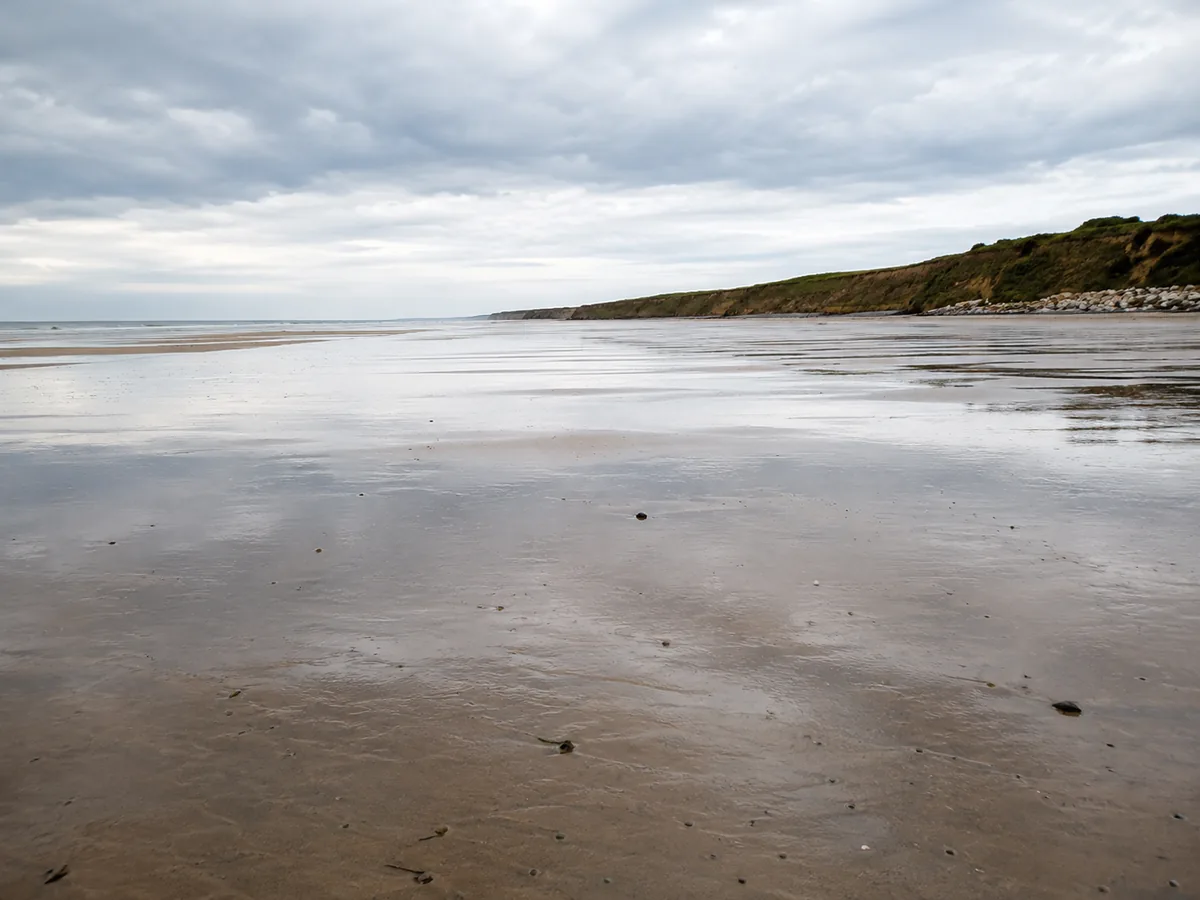
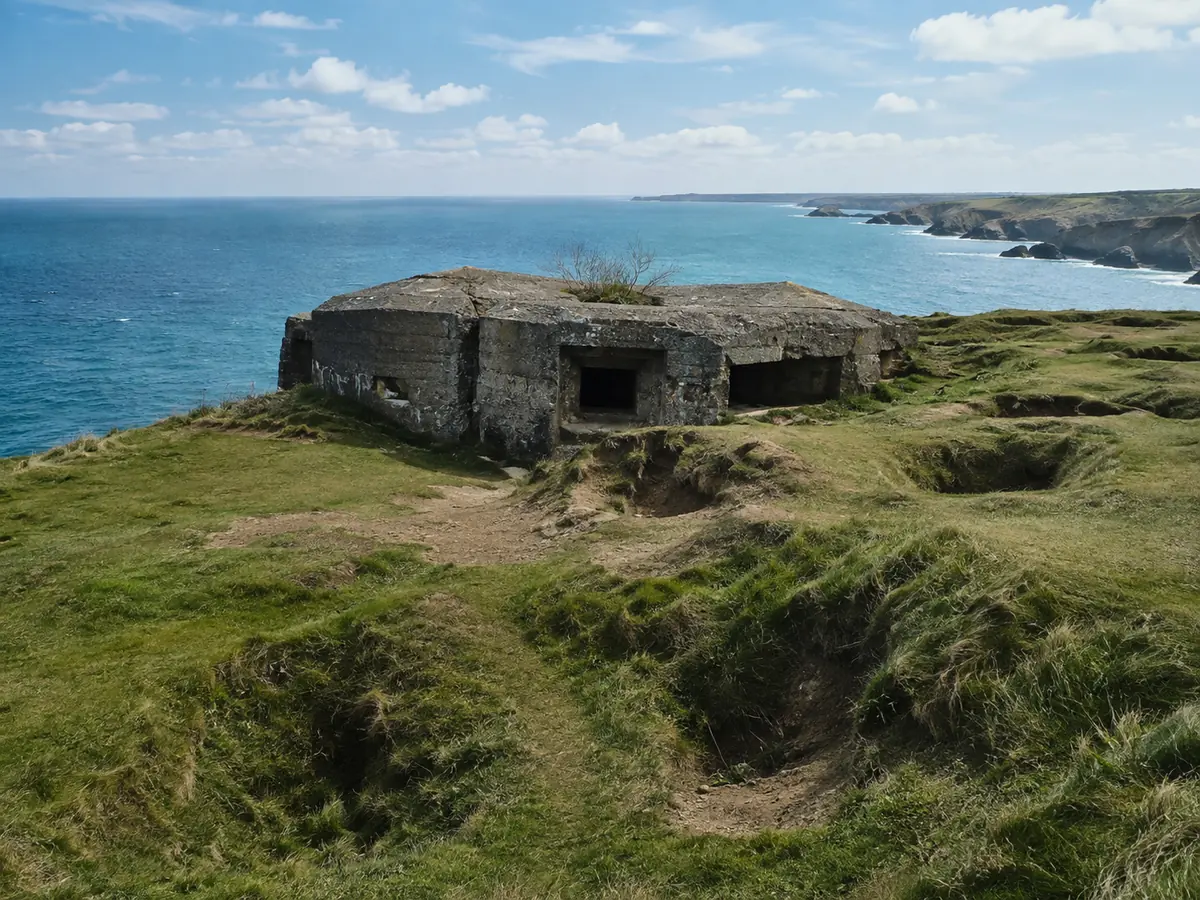
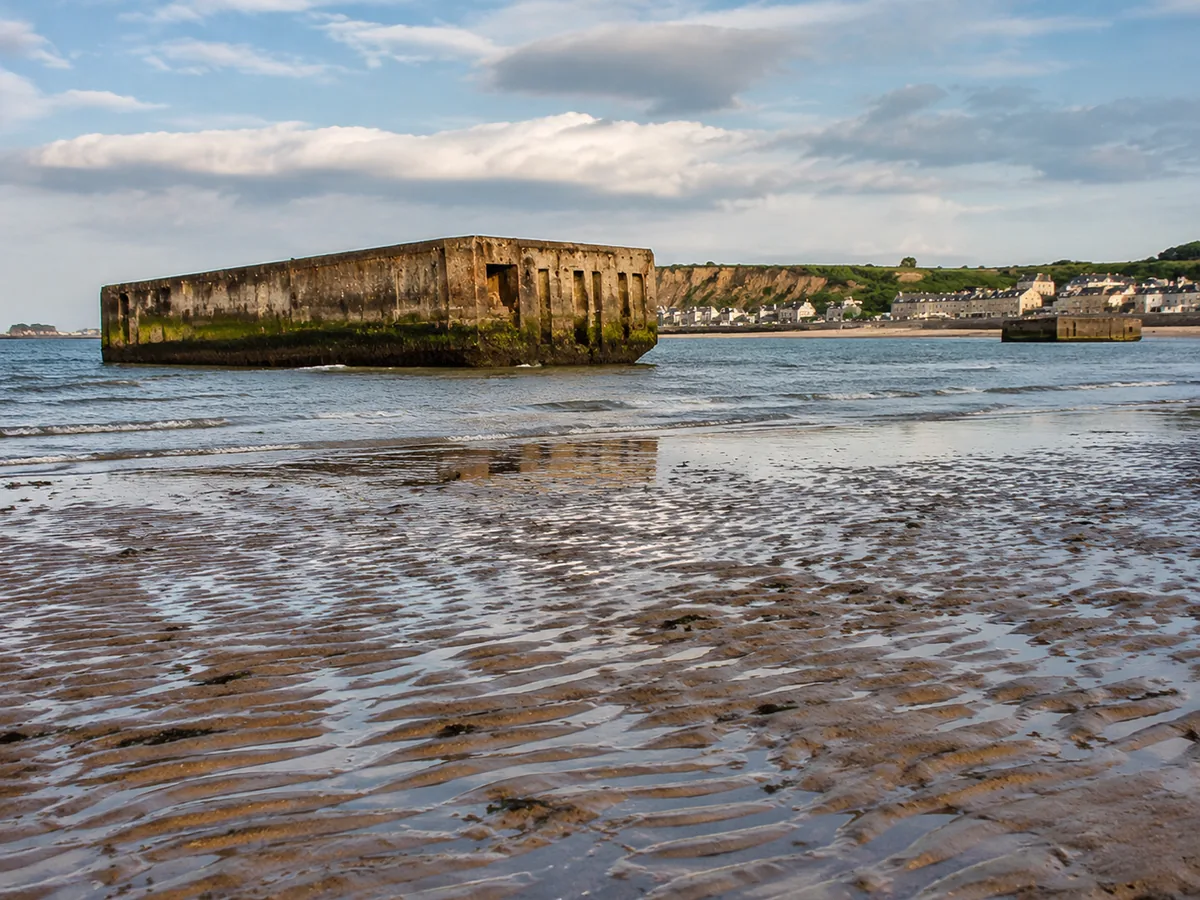
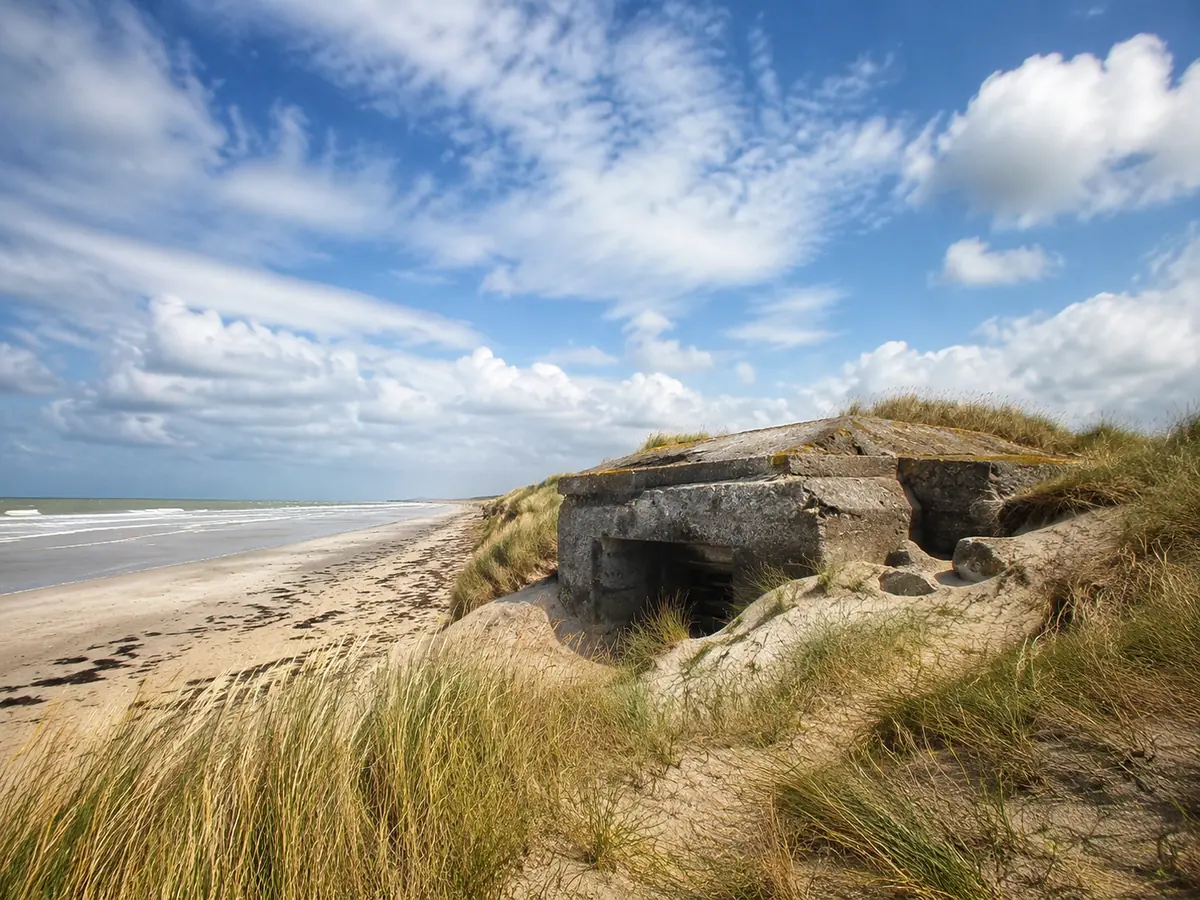
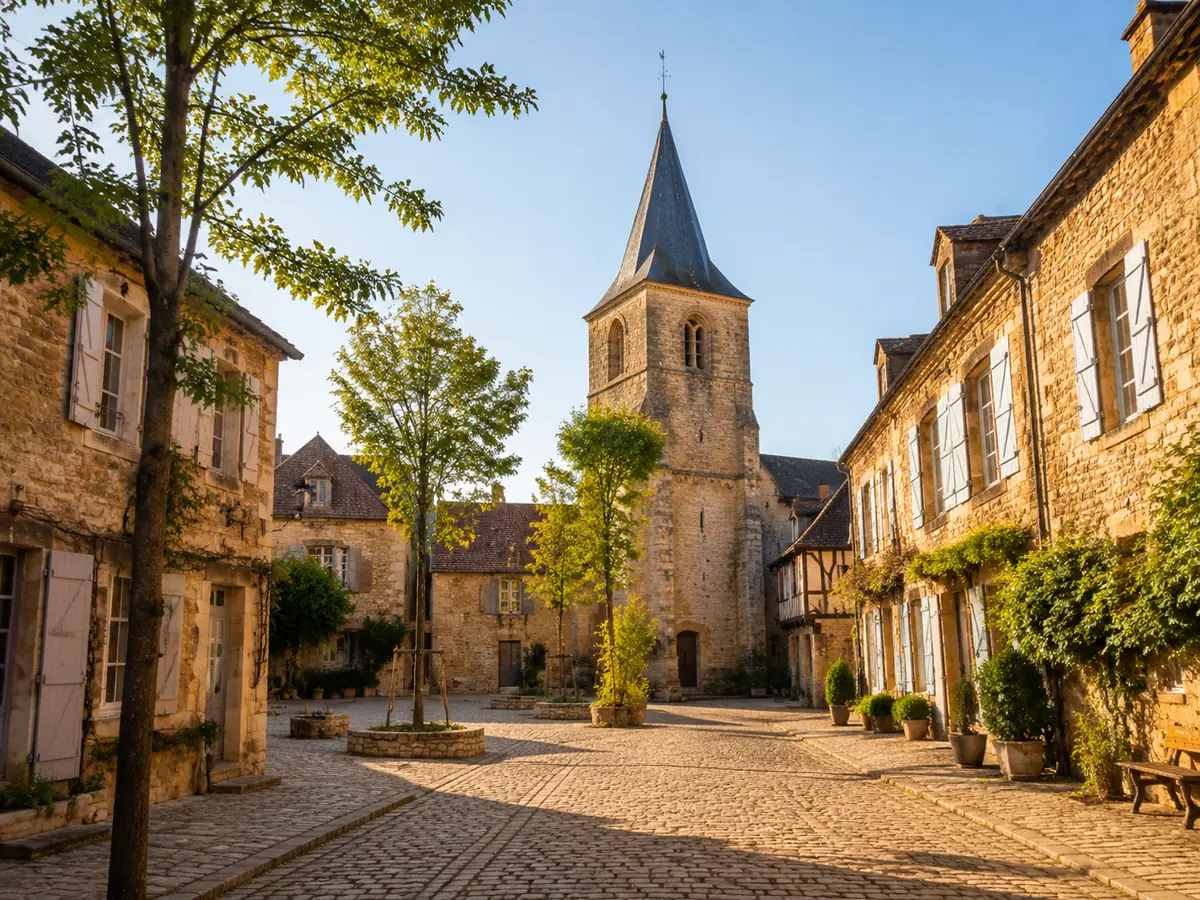
The coast, out of season
Five beaches, two cemeteries and a harbour that was towed across the Channel.
The six tours I list, and who each one is for
Two from Bayeux, three from Paris and one that collects you from your door. Full write-ups on the all-tours page.
 Most booked
From Bayeux: American D-Day Sites in Normandy Full-Day Tour
 Best from Paris
Paris: Normandy D-Day Sites Guided Day Trip with Lunch
 Half a day
From Bayeux: American D-Day Sites in Normandy Half-Day Tour
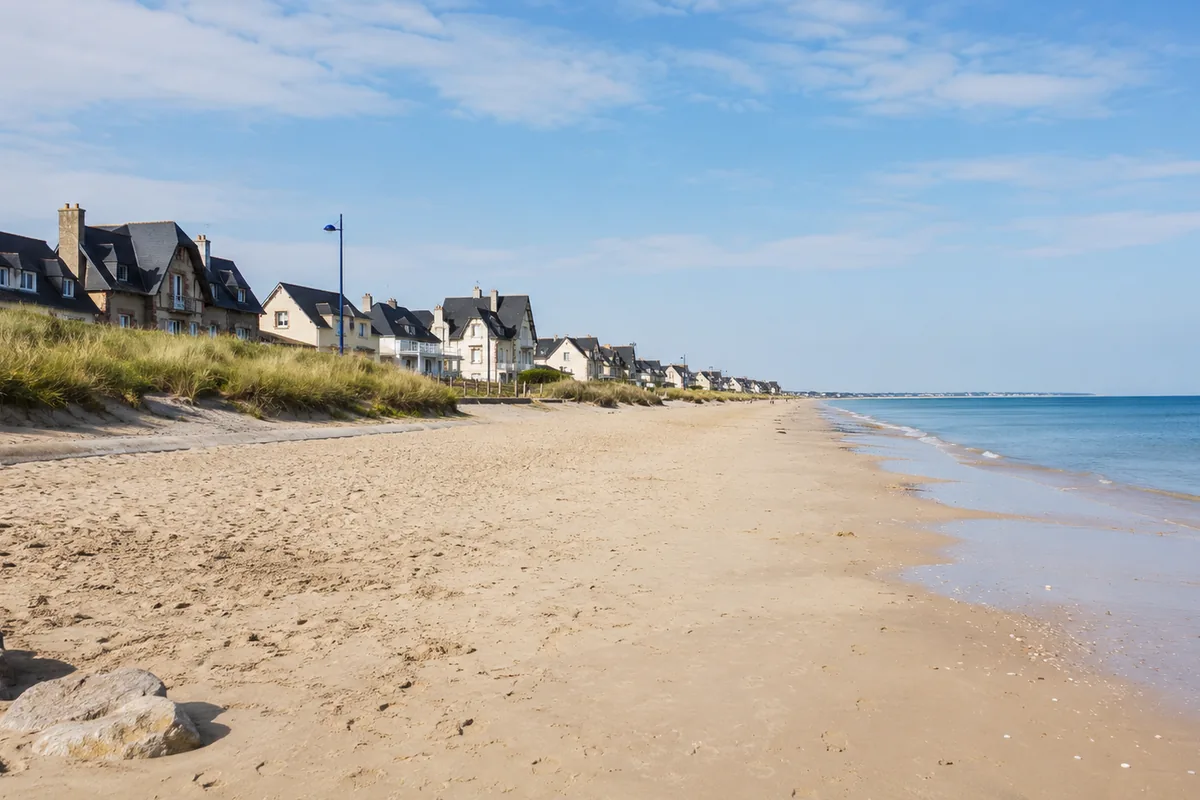 Canadian sector
Small-Group Canadian Normandy D-Day Juno Beach from Paris
 Private & flexible
Normandy: Explore the Historical Sites of D-Day
 Two icons, one day
Paris: D-Day Landmarks and Mont Saint-Michel Guided Tour
What travellers said afterwards
Review snippets from GetYourGuide, trimmed but not touched up.
Pascal was an exceptional tour guide. He’s a great storyteller and expert historian.
The visit to the American Cemetery with the flag ceremony touched me very deeply.
The legroom on the coach is a bit tight… very good performance by the live guide.
Being in the beach where my husband’s Grandfather landed on D-Day was incredibly meaningful for us.
We had two adults and two teenagers and everyone was able to enjoy the experience.
I highly recommend this tour to anyone who isn’t comfortable renting a car and driving to the sites.
Ratings and reviews are the operators’ live GetYourGuide figures. Read our full tour reviews ›
Quick answers before you book
The five things readers write to me about, answered short.
Can you visit the Normandy beaches without a car?
Yes, but it is genuinely limiting. The NOMAD bus from Bayeux to Colleville-sur-Mer runs one round trip a day and only from 20 April to 5 November; the Caen lines to Courseulles and Merville are better but stay in the eastern sector. Most car-free visitors end up on a guided day because it is the transport, not a luxury — the long version is on visiting without a car.
Is two days in Normandy enough?
For the headline sites, yes: one day per sector. Add up the published visit times for a single American-sector day — the Airborne Museum alone asks two hours, Utah Beach about an hour and a half — and you are at six and a half to eight hours of site time before you drive anywhere. Two days works if you accept skipping the Mémorial de Caen. See how long you need.
Which beach was the worst on D-Day?
Omaha, by a distance: the most heavily defended assault sector, a preliminary bombardment that largely missed, and casualty estimates running from about 2,400 to 5,000 and above depending on which source you take. Utah, at the other end, cost its assault division roughly 200. Beach by beach in which beach to visit.
How much does a Normandy beaches tour cost?
I don’t publish figures, on purpose — they move with your departure point, the season, group size and how far ahead you book, and a stale number on a webpage helps nobody. What I can tell you is what sits inside each ticket and what does not, which is the cost page. The live figure for your date is in the booking panel.
When should I go?
May and September are the two I’d pick: museums are on their long hours and the crowds are either not there yet or gone. Normandy rains a fairly consistent amount all year — the gap between the wettest month, December at 78 mm, and the driest, February at 57 mm, is 21 mm — so choose on daylight and crowds, not rain. Month by month in best time to visit.
Can’t make these dates?
Browse more available Normandy D-Day beaches tour and find one that fits your schedule — all with instant confirmation and free cancellation.
Normandy’s D-Day beaches, explained
I grew up in Bayeux and spent four seasons working front of house at the Musée du Débarquement in Arromanches. The conversation I had most often there started the same way: someone had taken the morning train from Paris, walked out of the station, and only then discovered that the beaches were still a car ride away. Nobody had told them. That is what this site exists to fix.
The geography is the problem, not the history
The five landing beaches are strung along roughly 80 km of coast. There is no railway running beside them and never has been. The sites people actually come for — Omaha, the American Cemetery, Pointe du Hoc, Utah, Sainte-Mère-Église — sit between 15 and 60 km apart with almost nothing useful running between them. The NOMAD bus from Bayeux to Colleville-sur-Mer makes one round trip a day, and only from 20 April to 5 November. Line 101 from Caen to Courseulles-sur-Mer is better, eight round trips on a weekday, but it lands you in the eastern sector, which is not where the default tour goes. So the first question is never which tour looks nicest. It is whether you have a car, and if you do not, a guided day stops being an indulgence and becomes the transport — which is why the car-free version of this trip is the page I rewrite most often.

Two sectors, and why your tour is American
The dividing line is roughly Port-en-Bessin, a working fishing port. West of it is the American sector: Utah, Omaha and Pointe du Hoc between them. East of it is the British and Canadian sector: Gold, Juno and Sword. H-Hour was 06:30 on the two American beaches; the British and Canadian landings came later, roughly 07:00 to 07:45, because the tide runs east to west along this coast. Almost every day tour sold as a “Normandy D-Day tour” is the American itinerary, and nobody says so before you book. If your grandfather came ashore at Juno with the 3rd Canadian Division, or at Gold with the 50th Northumbrian, the standard minivan will drive you the other way for eight hours. Check which sector you actually want before you pick a date.
What is still there
Not the same amount at each beach, which surprises people. At Utah the museum is built onto a German bunker at La Madeleine, in Sainte-Marie-du-Mont. Omaha is eight kilometres of wide, flat, open sand under the bluffs; at low tide the sea goes out for what feels like a kilometre, which tells you more about 6 June than any display case. The American Cemetery stands on the bluff above it with 9,389 graves and 1,557 names on the Walls of the Missing. Pointe du Hoc is the most intact bombed landscape on the coast, all craters and casemates, though the observation bunker platforms are closed at present and you keep to the marked paths. At Gold the Mulberry harbour caissons are still lying off Arromanches: about 96 Phoenix units, of which only 11 remain well preserved and 67 are ruins, with chloride corrosion projected to leave none in good condition by 2075. A genuine reason not to keep putting the trip off. Juno has the Juno Beach Centre at Courseulles-sur-Mer, which asks an hour and a half plus a guided bunker walk. Sword has the Grand Bunker at Ouistreham and, inland, Pegasus Bridge, where the original 1944 span is preserved in the museum grounds a few yards from the replica now carrying traffic. The Café Gondrée opposite was the first house in France to be liberated. I have set out which of these are worth your morning and which are not.
Why I give you ranges instead of numbers
You will see confident single figures everywhere for D-Day, and most of them are one source quoted without its caveat. Troops landed on 6 June is given as over 132,000 or as nearly 160,000 depending on whether the 23,400 airborne are counted with the seaborne. Casualties at Omaha are put at about 2,400 by the National WWII Museum, at 3,600 with around 770 killed by the Commonwealth War Graves Commission, and at 2,000 to more than 5,000 in other accounts. Sword is quoted at 683 by one source and about 1,300 by another, which is a total being confused with a figure for the dead. The National WWII Museum puts it plainly in its own fact sheet: “many of the numbers associated with D-Day assault forces and their casualties are approximations, and some sources vary widely.” I would rather hand you the range and tell you the sources disagree than pick the tidiest number and pretend. The one figure that stops people short is quieter: La Cambe, twenty minutes inland, holds 21,222 German graves, more than twice the American cemetery, and on a weekday in February you can have it to yourself.
What I would tell a friend with one day
Sleep in Bayeux and take the eight-hour American-sector day. It gets you Sainte-Mère-Église, Utah, Pointe du Hoc, Omaha and the cemetery with about 6h45 actually on the ground, and it starts from Place de Québec. Be at Colleville for the flag-lowering, which is one hour before closing — 16:00 on the current schedule — and know that the American Cemetery is moving towards visitor pre-registration; the timing is not settled, so check before you travel. If you are locked into Paris and not moving, the coach day is a fair trade only if you go in knowing that seven and a half of the fourteen hours are travel and Omaha gets twenty minutes. If you have two days, do one sector each and skip the Mémorial de Caen, which wants four hours on its own. And one Bayeux-specific warning for this year: the Tapestry is closed until autumn 2027, so if that was half your reason for coming, read how long you really need and rebuild the itinerary around the coast instead.
Frequently asked questions
What is the best way to visit the Normandy D-Day beaches?
It depends on four things: where you are starting from, whether you have a car, how much of a day you have, and whose sector you actually want. With a car and two days you can do it yourself. Without a car, a guided day is the transport rather than an indulgence, because there is no railway along the coast and the bus network between the villages is thin and seasonal. The full argument is on the best way to visit.
How much does a Normandy beaches tour cost?
This site publishes no figures, and that is a position rather than an oversight: what you pay changes with your departure point, the season, whether the tour is shared or private, whether lunch and museum entries are bundled, and how far ahead you book. What is worth knowing is the shape of the ticket — the Paris coach day includes lunch and a museum entry, the Bayeux full day includes neither but not tips either, and the Bayeux half-day does include tips. That is all laid out on what a tour costs, and the live figure for your date sits in the booking panel.
Can you tour the Normandy beaches without a car?
Yes, with real constraints. The NOMAD bus from Bayeux to Colleville-sur-Mer and the American Cemetery runs one round trip a day, and only between 20 April and 5 November; from Caen, line 101 reaches Courseulles-sur-Mer and the Juno Beach Centre eight times on a weekday. The signed Bayeux to Omaha e-bike route is 28 km and rated a full day. Practical detail on visiting without a car, and train times on getting there.
How long do you need at the Normandy beaches?
One day covers one sector properly. Two days — one American, one British and Canadian — is the sweet spot for most people, provided you accept that the Mémorial de Caen asks about four hours on its own and will not fit. Three days lets you add La Cambe, Longues-sur-Mer and a slow return to Omaha at low tide. See how long you need.
Which D-Day beach should I visit?
If you have one day and no strong family connection, the American sector from Bayeux — Omaha, the cemetery at Colleville-sur-Mer and Pointe du Hoc — gives you the most in the least driving. If your grandfather landed at Juno, Gold or Sword, the default tour does not go there and nobody tells you before you book: read the British and Canadian sector first. Beach by beach in which beach to visit.
Can I do the D-Day beaches and Mont-Saint-Michel in one day from Paris?
You can, and it is honest about what it costs you: the D-Day half is a 15-minute photo stop at Omaha Beach and 30 minutes at Pointe du Hoc, with no American Cemetery, no Utah Beach and no Sainte-Mère-Église, inside a 15-hour day of which roughly 9h30 is coach time. At 4.5 from 154 reviews it is the lowest-rated tour I list, and the reviews explain why. Book it if Mont-Saint-Michel matters as much as the beaches; if D-Day is the point of the trip, book from Bayeux. More on adding Mont-Saint-Michel.
When is the best time to visit the Normandy beaches?
May and September. Museums are on their longest hours in both, September averages 16 °C against May’s 13.3 °C, and the crowds are either not there yet or gone after the French rentrée. Rain is not the deciding factor — the difference between the wettest month and the driest is 21 mm. The week around 6 June is extraordinary for ceremony and the worst week of the year for quiet. Month by month on best time to visit.
Where should I stay for the D-Day beaches?
Bayeux, for most people: direct trains from Paris Saint-Lazare in as little as 2h12, buses to Omaha and Arromanches, a CWGC war cemetery with 4,144 Commonwealth burials in town, and the coast about twenty minutes away. One 2026 caveat — the Bayeux Tapestry is closed for renovation until autumn 2027 and the Tapestry itself is at the British Museum until 11 July 2027, so do not plan a day around it. Caen, Arromanches, Port-en-Bessin and Sainte-Mère-Église all have a case: where to stay.
Still have questions? Email us [email protected]